There is something special aboutYellowstone stine national park winter snow transportation vehicles Christmas season imagining Christmas in Yellowstone National Park. Snow-covered forests stretch into the distance, steam rises from the hot springs, and bison move slowly through the white landscape. The usual sounds of busy roads and crowded viewpoints give way to something quieter. For a moment, it feels as though the whole world has slowed down.
Perhaps you have been dreaming of seeing Old Faithful erupt against a backdrop of snow. Maybe you want to take your family somewhere different this Christmas, photograph wildlife in its natural surroundings, or simply experience the kind of winter scenery that stays in your memory long after the holiday is over.
But Yellowstone in December is not an ordinary holiday destination.
Winter changes almost everything about how you explore the park. Roads close, transportation options become limited, temperatures can fall dramatically, and some of the places you might have planned to visit during summer are no longer accessible by car.
The biggest disappointment would be arriving with beautiful Christmas plans only to discover that you cannot reach the places you came to see.
That does not mean you should abandon the idea. A Christmas visit to Yellowstone can be extraordinary, provided you understand what you are getting into.
Here are 10 mistakes to avoid when visiting Yellowstone National Park at Christmas, so you can spend less time dealing with unexpected problems and more time enjoying the experience.
1. Assuming You Can Drive to All the Famous Attractions

This is probably the biggest mistake you can make when planning a Christmas visit to Yellowstone.
During summer, you can drive to many of the park’s famous attractions, stop wherever you like at designated pullouts and spend the day moving between geysers, waterfalls and wildlife-viewing areas.
Christmas is different.
Most Yellowstone roads close to ordinary vehicles in early November. The road connecting the North Entrance at Gardiner, Montana, to the Northeast Entrance near Cooke City is generally the only route open to regular vehicles throughout winter. It passes through Mammoth Hot Springs, Tower Junction and Lamar Valley.
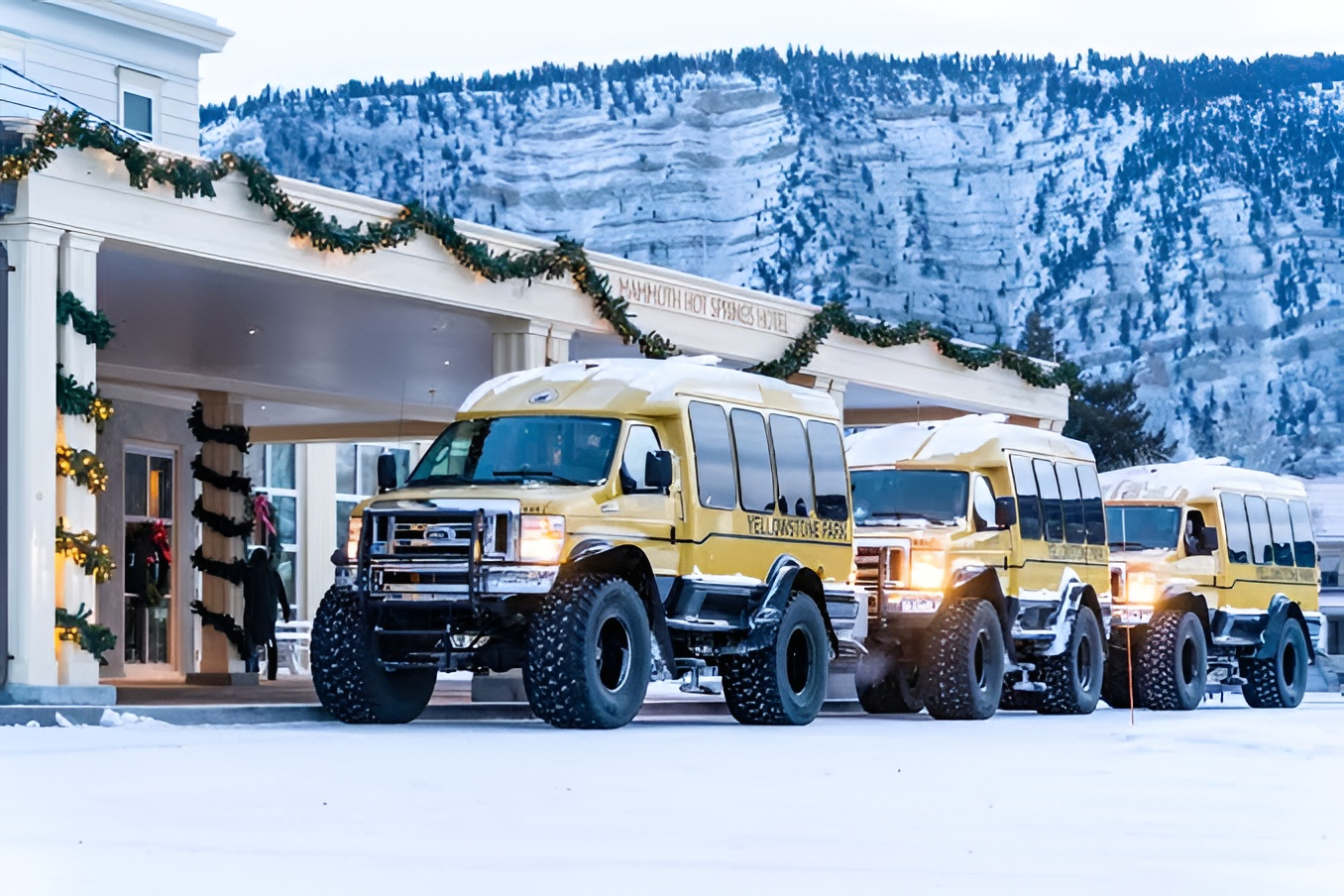
If you want to reach popular interior destinations such as Old Faithful, the Grand Canyon of the Yellowstone or Yellowstone Lake, you will generally need an approved snowcoach, permitted snowmobile access or another authorized winter travel arrangement.
For the 2026–2027 winter season, the National Park Service lists December 15 as the anticipated beginning of oversnow travel on several interior routes. Individual routes have different opening dates, and weather can change the schedule.
Imagine arriving in Yellowstone expecting to drive straight to Old Faithful on Christmas morning, only to discover that the road is closed to your vehicle. That is a frustrating surprise that could have been avoided with a little planning.
What to do instead: Decide which attractions you want to visit before booking accommodation. Check the official Yellowstone winter road schedule and arrange snowcoach transportation where necessary.
2. Waiting Until the Last Minute to Book Your Christmas Accommodation

Christmas is not the time to assume you will find somewhere comfortable to sleep after arriving.
Yellowstone has very limited winter accommodation compared with its summer season. The two principal in-park winter lodging options are Mammoth Hot Springs Hotel and Old Faithful Snow Lodge.
They offer different experiences.
Mammoth Hot Springs is accessible by regular vehicle through the North Entrance, making it a practical base for exploring the northern part of the park and visiting Lamar Valley.
Old Faithful Snow Lodge offers a different experience. You can stay close to the famous geyser basin, but you must arrange authorized oversnow transportation to reach it.
For the 2026–2027 season, Old Faithful Snow Lodge is scheduled to open on December 16, 2026, while Mammoth Hot Springs Hotel is scheduled to remain open through March 8, 2027. Always confirm dates and availability before making your plans.
Another option is staying in nearby communities such as Gardiner, West Yellowstone or Cooke City, depending on your intended entrance and activities. However, remember that accommodation outside the park does not automatically solve the problem of accessing its interior.
What to do instead: Book accommodation early, establish how you will reach it in winter and confirm whether transportation is included or must be booked separately.
3. Packing for an Ordinary Winter Holiday Instead of a Yellowstone Winter

There is a difference between being cold while walking around a Christmas market and being cold while standing outside watching wildlife in Yellowstone.
You might spend an extended period outdoors waiting for a wolf to appear across a snowy valley or watching steam rise from a geyser. You cannot always predict how long you will remain outside, and the wind can make an already freezing day uncomfortable very quickly.
Yellowstone’s December temperatures are particularly harsh. At Mammoth Hot Springs, the average December high is approximately 31°F (−1°C), while the average low is around 13°F (−11°C). Conditions at higher elevations can be considerably colder.
A fashionable coat and ordinary sneakers will not be enough.
Pack:
- Thermal base layers that keep moisture away from your skin.
- Insulated trousers and a warm winter jacket.
- Waterproof, insulated boots with good grip.
- Wool socks and spare pairs.
- Insulated gloves or mittens.
- A warm hat and neck covering.
- Sunglasses to protect your eyes from reflected sunlight.
- Hand and foot warmers.
- A waterproof outer layer.
Avoid cotton as your main insulating layer. It holds moisture and loses much of its ability to keep you warm when wet.
What to do instead: Dress in several adjustable layers. You should be able to add or remove clothing depending on your activity, rather than relying on one heavy jacket to protect you from everything.
4. Planning to Visit Old Faithful Without Arranging Winter Transportation

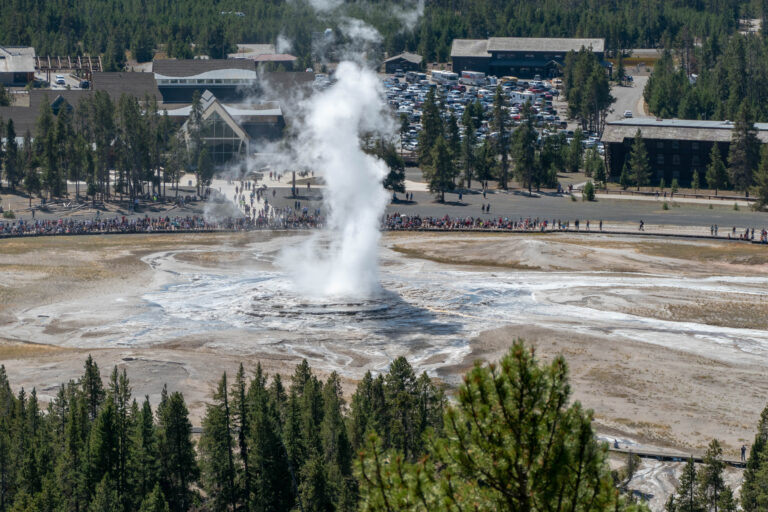
For many people, seeing Old Faithful erupt is the highlight of a Yellowstone holiday.
There is something unforgettable about watching hot water shoot into the freezing air while snow surrounds the geyser basin. It is one of those experiences that makes a winter trip feel genuinely different from an ordinary summer visit.
However, there is one important detail: Old Faithful is not normally accessible by private car during winter.
After the interior roads open for oversnow travel, visitors can reach the area through authorized snowcoach services or permitted snowmobile arrangements.
If you intend to stay at Old Faithful Snow Lodge, you also need to organize your transportation to and from Mammoth Hot Springs.
Do not assume that reserving a room automatically secures your seat on a snowcoach.
What to do instead: Book your transportation and accommodation together as part of your planning. Confirm departure times, return arrangements, luggage restrictions and the possibility of weather-related delays.
If Old Faithful is the main reason for your Christmas trip, make it a priority rather than something you hope to fit into your schedule.
5. Underestimating Winter Driving Conditions

The road from Gardiner through Mammoth Hot Springs and Lamar Valley towards Cooke City offers some beautiful winter scenery.
It is also a route that deserves your full attention.
Snow-covered roads, black ice, poor visibility and sudden weather changes can make driving difficult, even for people who are comfortable driving in winter conditions.
The problem is not simply getting from one destination to another. You might encounter wildlife on the road, need to slow down for snowplows or find that conditions have deteriorated since you last checked.
A journey that looks short on a map can take considerably longer in winter.
Before setting out, make sure your vehicle is properly equipped for winter driving. Carry blankets, warm clothing, a flashlight, a first-aid kit, booster cables and an emergency shovel. Keep your fuel tank sufficiently full, and do not depend on finding fuel exactly when you need it.
The National Park Service also warns that help may take considerable time to reach stranded motorists in remote winter areas.
What to do instead: Check road conditions before every journey, allow extra driving time and avoid planning an itinerary that depends on reaching several distant places in one day.
If conditions become dangerous, changing your plans is better than taking unnecessary risks.
6. Getting Too Close to Wildlife for the Perfect Christmas Photograph

One of the most beautiful things about Yellowstone in winter is the opportunity to see wildlife against a snowy landscape.
Lamar Valley is particularly well known for wildlife watching. Depending on conditions and luck, you may see bison, elk, wolves, coyotes and other animals.
It is easy to understand why visitors become excited when they spot a bison standing in the snow or a wolf moving across a distant hillside.
But excitement should never turn into careless behaviour.
Wild animals are not Christmas decorations or friendly photo opportunities. Bison can move surprisingly quickly, and even animals that appear calm can become dangerous if they feel threatened.
Yellowstone requires visitors to remain at least 100 yards (91 metres) from bears and wolves and at least 25 yards (23 metres) from bison, elk, moose and other wildlife.
Do not approach animals, feed them or leave your vehicle to get closer for a photograph. Use binoculars or a camera with a suitable zoom instead.
What to do instead: Bring binoculars, a telephoto lens if you enjoy photography, and plenty of patience. Some of your best wildlife memories will come from watching quietly at a safe distance.
7. Walking Onto Thermal Ground or Ignoring Slippery Boardwalks

Yellowstone’s hot springs, geysers and steaming thermal features are among the most fascinating sights in the park.
In winter, the contrast between boiling water and freezing air makes these places particularly beautiful. Steam rises through the cold air, snow collects around the landscape and the colours of the thermal pools become even more striking.
But these areas are not ordinary walking trails.
The ground around thermal features can be dangerously thin, unstable or extremely hot beneath the surface. Walking outside designated boardwalks and marked trails can lead to serious injuries or death.
Even when you remain on the correct paths, winter introduces another problem: ice.
Boardwalks can become slippery, particularly around thermal areas where moisture and freezing temperatures create difficult walking conditions.
What to do instead: Stay on designated boardwalks and marked trails at all times. Wear footwear with good traction and consider removable traction devices for icy surfaces.
Do not step over barriers or attempt to get closer to a thermal pool for a photograph. The best view is never worth risking your safety.
8. Assuming Everything Will Be Open During Christmas Week

It is natural to assume that a major national park will have plenty of restaurants, visitor centres, shops and facilities operating during the Christmas holidays.
Unfortunately, that is not how Yellowstone works in winter.
Many facilities close for the season, and the services available during summer are significantly reduced. Restaurants, shops, visitor centres, fuel services and other facilities operate on seasonal schedules.
Even if you have booked accommodation, you should not assume that every service you might need will be available nearby.
This becomes especially important if you are travelling with children, older family members or anyone who needs regular access to food, medication or other essentials.
Imagine finishing a long day outdoors and discovering that the restaurant you expected to visit is closed. It is a small planning mistake that can become an unpleasant part of your Christmas holiday.
What to do instead: Check the official Yellowstone operating dates and confirm the opening hours of restaurants, shops and visitor facilities.
Carry enough snacks and drinking water for your planned activities. Keep essential medication with you and identify where you can obtain fuel and supplies before travelling.
9. Trying to See the Entire Park in One Christmas Trip

Yellowstone is enormous, covering approximately 2.2 million acres.
During summer, visitors can plan ambitious road trips connecting Old Faithful, Grand Prismatic Spring, Yellowstone Lake, Mammoth Hot Springs and the Grand Canyon of the Yellowstone.
Winter makes that approach much more difficult.
Some attractions are accessible through the northern road corridor, while others require snowcoach or snowmobile transportation. You cannot simply drive between all the famous landmarks as you would during summer.
Trying to squeeze too many attractions into a short Christmas holiday can leave you spending more time travelling and worrying about schedules than enjoying the park.
It can also make your trip unnecessarily expensive if you book multiple tours without considering how they fit together.
What to do instead: Choose one main area for each day.
- Day 1: Explore Mammoth Hot Springs and the surrounding northern area.
- Day 2: Spend time wildlife watching in Lamar Valley.
- Day 3: Take an organized snowcoach trip towards Old Faithful, if operating and available.
This is an illustrative itinerary, not a guarantee that all activities or transport connections will be available on your chosen dates.
A slower trip can be far more rewarding. Give yourself time to stop, observe wildlife, enjoy the scenery and appreciate the quietness that makes Yellowstone special in winter.
10. Forgetting That Christmas Weather Can Change Your Plans

Perhaps you have planned everything perfectly.
Your accommodation is booked, your snowcoach reservation is confirmed, your winter clothes are packed and your family is excited.
Then the weather changes.
Winter weather in Yellowstone can be unpredictable. Heavy snowfall, strong winds, extreme cold and poor visibility can affect travel arrangements and outdoor activities.
Roads may close temporarily, and scheduled transportation can be delayed or cancelled when conditions become unsafe.
This is why building flexibility into your Christmas itinerary is so important.
Do not make your entire holiday depend on one activity happening at one specific time. If a snowcoach trip is delayed or a particular area becomes inaccessible, you should have another way to enjoy your time.
Keep an eye on official park updates and make sure you have a way to receive important travel information.
What to do instead: Allow an extra day where possible, avoid tight connections and keep some alternative activities in mind. Check the weather and road conditions regularly, including shortly before departure.
Remember, the purpose of a holiday is to enjoy the experience, not to force every part of your original schedule to happen regardless of conditions.
Before You Go: Your Yellowstone Christmas Planning Checklist
A little preparation can make the difference between a Christmas holiday filled with wonderful memories and one spent dealing with avoidable problems.
Before leaving, go through this checklist:
- Confirm which Yellowstone entrances are accessible during your travel dates.
- Check the latest winter road conditions.
- Reserve accommodation and confirm its seasonal opening dates.
- Arrange snowcoach or authorized snowmobile transportation if visiting the park interior.
- Check which restaurants, visitor centres and other facilities will be operating.
- Pack insulated clothing, winter boots and footwear traction devices.
- Prepare an emergency vehicle kit if driving.
- Carry food, drinking water and essential medication.
- Plan wildlife-viewing stops without approaching animals.
- Leave room in your itinerary for weather-related delays.
Important official Yellowstone resources
Winter road conditions: Check closures and oversnow travel schedules. Yellowstone road status
Winter safety: Cold-weather preparation and wildlife distances. Yellowstone winter safety
Accommodation and operating dates: Check winter lodging and facility schedules. Yellowstone lodging dates
Frequently Asked Questions About Visiting Yellowstone at Christmas
1. Is Yellowstone National Park open on Christmas Day?
Yes. Yellowstone is generally open throughout the year, including Christmas Day. However, winter access is restricted. The North Entrance and Northeast Entrance road corridor is generally accessible to regular vehicles, weather permitting. Most other park roads require authorized oversnow transportation.
2. Can you visit Old Faithful during Christmas?
Yes. Old Faithful can be visited during the winter season using authorized snowcoach transportation or permitted snowmobile access when the relevant routes are operating. You cannot normally drive your personal vehicle directly to the geyser during winter.
3. Does it snow in Yellowstone during Christmas?
Yes. December is one of Yellowstone’s snowiest and coldest periods. Snowfall varies considerably by location and weather conditions, but visitors should prepare for snow-covered landscapes, icy roads and freezing temperatures.
4. Can you see wolves in Yellowstone during Christmas?
Yes. Winter is an excellent time for wildlife watching, particularly in Lamar Valley. Wolves, bison, elk and other animals can be seen throughout the season, although sightings are never guaranteed.
5. Where should you stay when visiting Yellowstone at Christmas?
Mammoth Hot Springs Hotel is a practical choice for visitors arriving by regular vehicle. Old Faithful Snow Lodge offers an opportunity to stay deeper inside the park, but requires oversnow transportation. Gardiner and other nearby communities also provide accommodation options.
6. Is Yellowstone worth visiting at Christmas?
Absolutely, if you understand the limitations of winter travel. You get snowy landscapes, fewer visitors, opportunities to observe wildlife and a chance to experience famous geothermal features in a completely different setting. However, it requires more preparation than a summer visit.
The Christmas Experience You’ll Remember

There is a reason people continue to dream about visiting Yellowstone.
It is not simply about ticking Old Faithful off a list or taking a photograph beside a famous landmark. Sometimes it is about standing quietly in a snowy landscape, watching a herd of bison move through the cold, or seeing steam rise from the earth while the rest of the world seems covered in silence.
Perhaps you will remember the first time your children saw a bison in the snow. Perhaps it will be the excitement of watching Old Faithful erupt, or the simple pleasure of returning to a warm lodge after spending hours exploring the winter wilderness.
Those are the moments that make travelling worthwhile.
You do not need to visit every attraction or follow an exhausting itinerary to have a wonderful Christmas in Yellowstone. You simply need to understand the season, prepare for its challenges and give yourself enough time to enjoy what makes this extraordinary place special.
This Christmas, don’t just plan a trip to Yellowstone. Plan an experience that you and the people you love will still be talking about years from now.
Editorial note: Winter road schedules, transportation and facility opening dates can change. This guide uses National Park Service and park lodging information available in November 2026. Confirm the latest arrangements for your exact travel dates before departure.
Sources and Further Reading
More from Wild Trail Atlas